The Cloister Gallery at Grace Cathedral is intended to provide a space for the celebration of the fine arts and to encourage awareness of the deep connections between creativity and spirituality. In keeping with the long-established appreciation of the fine arts in the Anglican spiritual tradition, the Gallery seeks to help people cultivate a fulsome awareness of the relationship between creative expression and human thriving.
The Gallery has been open since 1996, and has hosted shows consisting of a variety of media including paintings, drawings, photography, fabric arts, and mixed media. The Gallery schedule typically consists of shows dedicated to works by a single artist. Shows usually rotate on a monthly basis. Artists of all styles and backgrounds are invited and encouraged to consider displaying their work at the Gallery.
The Gallery is situated next to the spacious atrium in the Cloister Building between the Cathedral and Cathedral Hall. The Gallery itself is in an enclosed hall that runs east and west, with ample natural and artificial lighting. Track lighting fixtures focused on individual display space utilize Light Emitting Diode (LED) technology and may be adjusted using a dimmer switch. The large windows on the north wall of the Gallery provide a view of the Cathedral’s landscaped Close without allowing direct sunlight into the Gallery space itself. The Gallery is approximately 61’ long, 7’ wide, and 8’ high. The walls of the Gallery are composed of the unfinished limestone blocks used throughout the Cathedral. Artwork can be displayed in between the windows and doors on both north and south walls utilizing suspended rods with stabilizer bars. The Gallery can accommodate a maximum of 16 framed images (see Guidelines below for maximum widths) and a more limited number of three-dimensional works, depending on their size.
The Cloister Gallery is open to the public during business hours or from 8 a.m. – noon on Sunday. Please call ahead for open office hours. Visitors and touring groups are welcome, and there is no fee for admission. The Cathedral is located at 701 SW 8th Ave. in Topeka, Kansas.
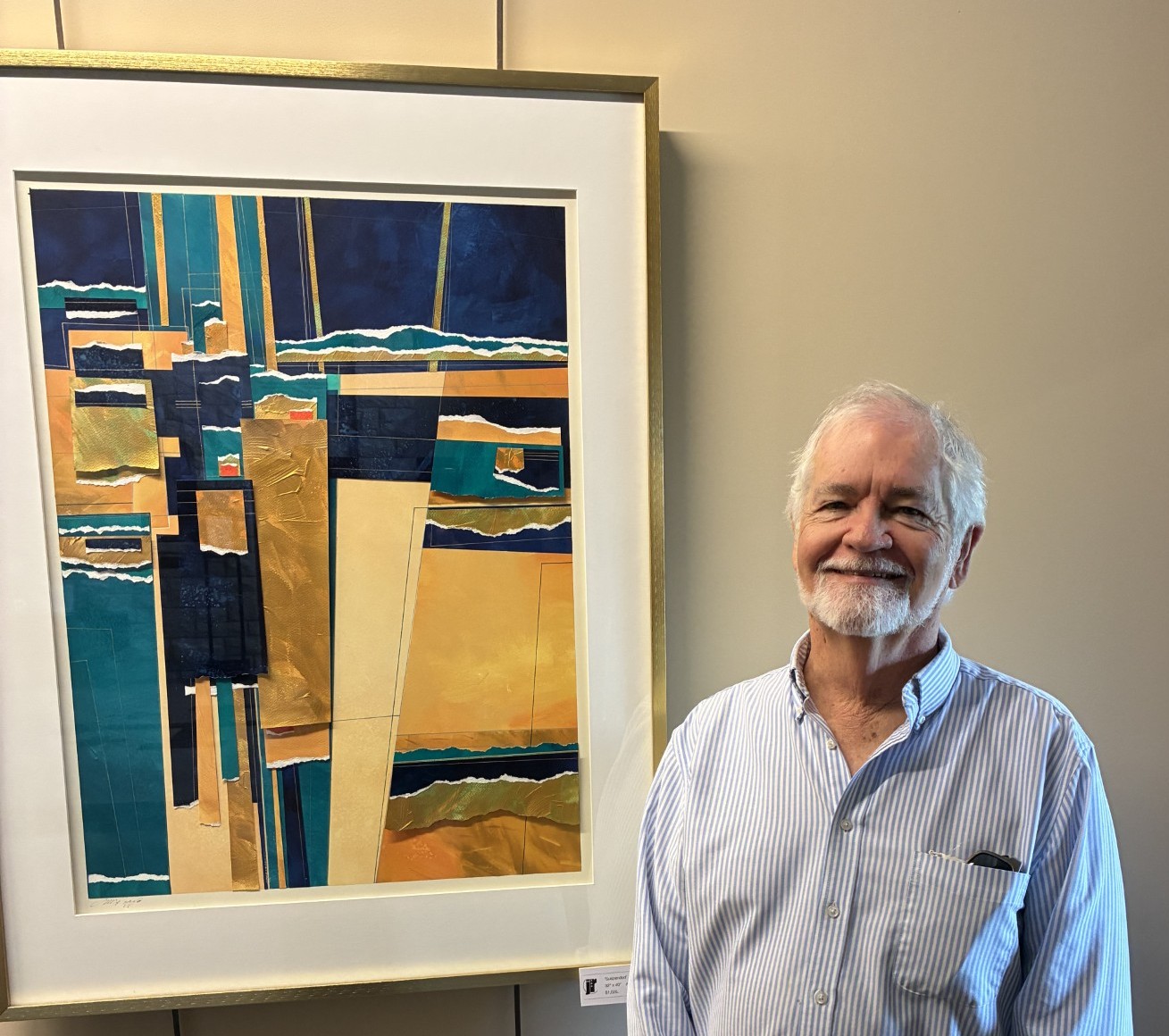
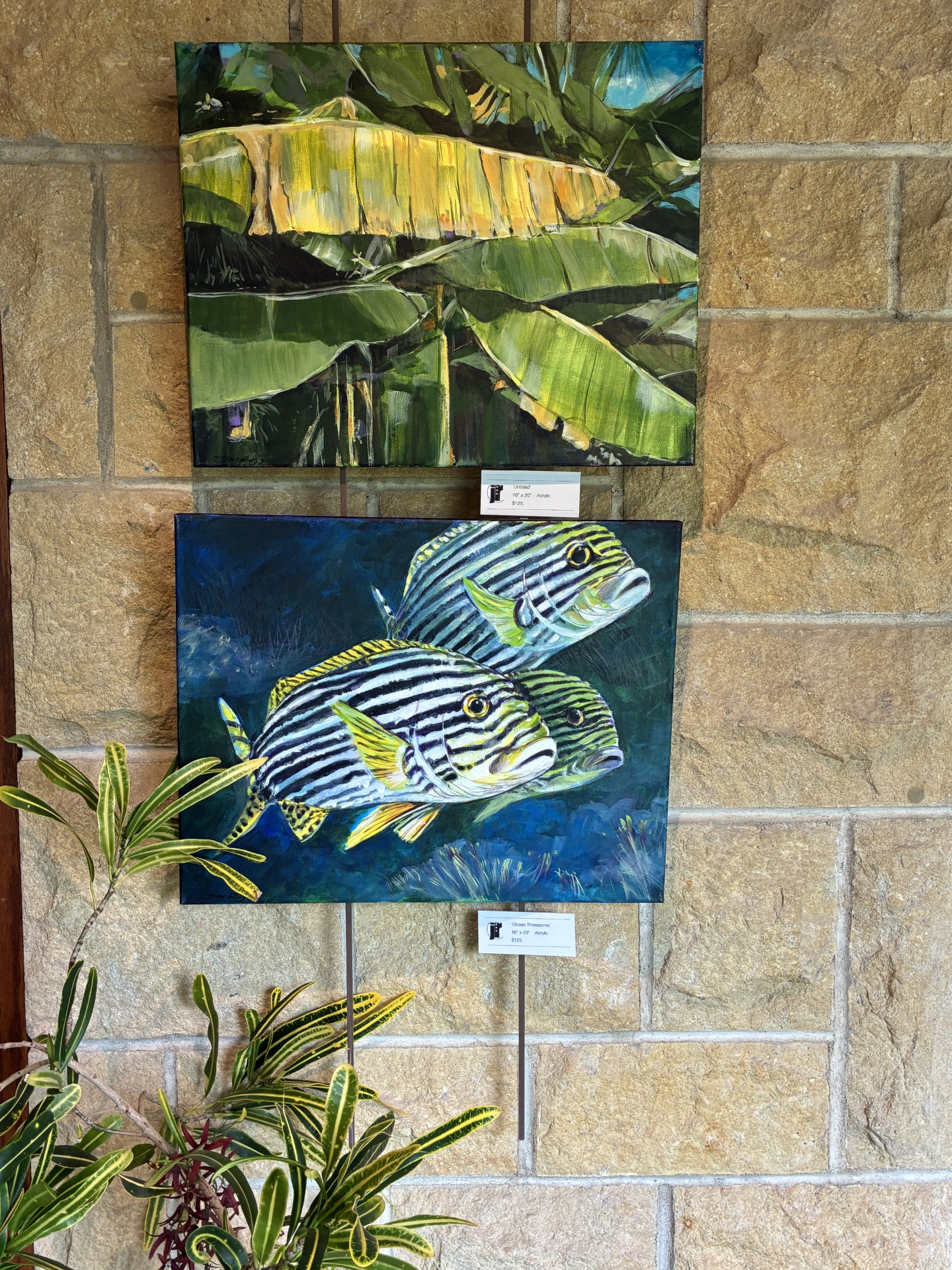
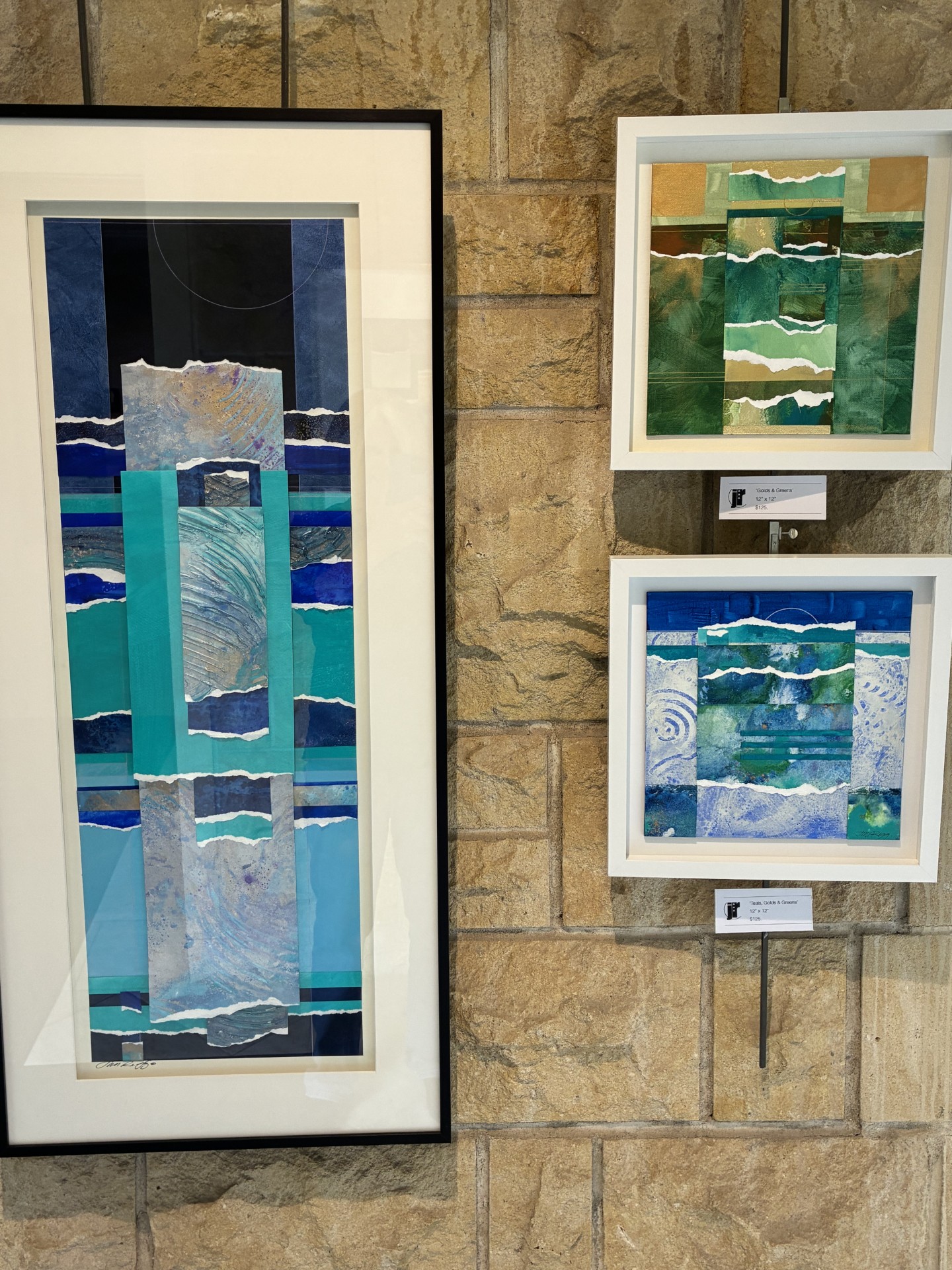
Now showing in the Cloister Gallery: Jim Rigg
Jim is a graduate of Wichita State University (KS) with a Fine Arts degree in Graphics. He is an accomplished watercolorist with an innovative and unique style. ‘I enjoy experimentation, believing it extends my boundaries, both in conceptional and contemporary watercolor techniques. My finished paintings are projections of my imagination, and this, for me, is the great adventure of painting: The exploitation of areas where the imagination can take over and intuitively guide the hand. The challenges to me are inventive compositions, varied textures and color exploration – offering each painting a sense of time, space and solitude.’
Kansas Postcard Artist
Southwestern Bell Telephone Art Awards
Best of Show, Winfield, KS, Garden City, KS, & Hastings, NE
Top Merit Award – Flatwater Festival, Lincoln, NE
Grumbacher Gold Medallion & Cash Award – KWS
Edward J. & Carol A. Nazar Patron Award – KWS
Patron Purchase Award, Bank IV N.A., Wichita – KWS Seven
State Exhibition
12th Annual Heart of America – Superb Printing Competition
KWS Catalog
Merit Award, 99, 02, 06, 10 & 12 – Wichita Garden Show
Churchill Award – Missouri Watercolor Exhibition
President’s Award – Southpoint Art Festival – Lincoln, NE
2008 Kansas Watercolor Society Merit Award
Member:
Lighthouse Gallery & School, Tequesta, FL
Artists of Palm Beach County, Lake Park, FL
Ortiz Smykla Gallery Studio, West Palm Beach, FL
Brigman Studios & Gallery, Hutchinson, KS
Strecker-Nelson Gallery, Manhattan, KS
Kansas Watercolor Society, Oklahoma Watercolor Society,
Southern Watercolor Society, & Georgia Watercolor Society
jimriggart@gmail.com
Instagram: riggjim & riggjim6
In the Common Room: Rev. Les Jackson
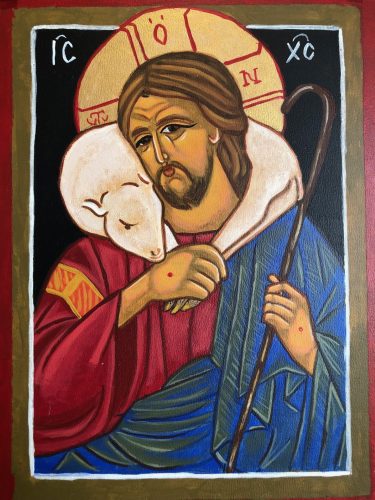
The Reverend Les Jackson has led retreats since 2006, focusing on the spiritual practice of iconography, its use in prayer and worship, its unique theological perspective inherited from the Eastern Orthodox tradition, and the creative process of “writing” or painting icons. Like all spiritual practices, iconography seeks to connect us deeply with the mysteries of God, who rightly orders our chaos, our fears, anxieties, sin, and death, and restores communion. There is a theology of beauty and optimism underlying the Eastern understanding of “salvation” or “well-being” in which humanity participates with God in the redemptive and restorative work of creation. Actively cooperating with God, we join as “the repairer of the breach, the restorer of streets to live in” (Isaiah 58:12b).
Original beauty and goodness in humanity and creation, rather than original sin, are at the core of the Eastern Christian tradition. Original sin is never mentioned in the creation narrative, but the belief that we are created in the image of God is mentioned. The words “image” and “icon” are often used interchangeably. What becomes apparent is how obscured the image of our Creator becomes, and how readily we are willing to accept deception, thereby denying ourselves and others the authenticity and beauty of God’s image.
The iconographer is to be a visual scribe, using line, color, and form to point to a deeper narrative of God’s beauty: “God becoming human so that we might become once again like God.”
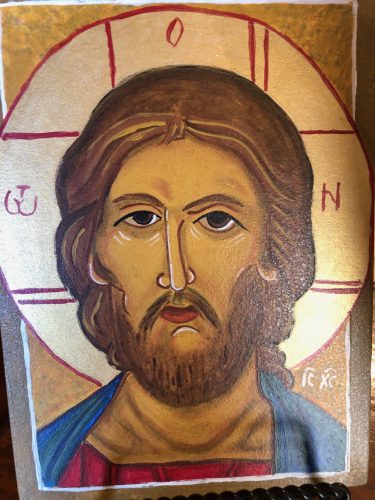
Father Jackson studied with The Reverend Peter Pearson, Episcopal Priest, Iconographer, and author of “A Brush with God” and “Another Brush with God: Further Conversations About Icons,” and was mentored by the late Suzanne Acker. Father Jackson was ordained to the Diaconate at the Church of the Heavenly in Abilene, Texas, on October 29th, 1999, and served as a deacon at St. Christopher’s Episcopal Church in Lubbock, Texas, and St. John’s Episcopal Church, Austin, Texas, while attending the Episcopal Theological Seminary of the Southwest. He was ordained to the Priesthood on August 13, 2011, at St. John’s Episcopal Church in Odessa, Texas, where he served as rector and school chaplain until accepting a call to serve St. Matthew’s Episcopal Church, Newton, Kansas. Father Jackson currently serves at Trinity Episcopal Church, El Dorado, and works as a Hospice Chaplain for Good Shepherd Hospice in Wichita.
Exhibiting Guidelines
The following guidelines are intended to help those preparing to show their art at the Cloister Gallery organize their work and plan their exhibit.
The Gallery displays only original works; reproductions and prints are not accepted with the exception of glice prints of the artist’s original works. There is space for 16 pieces with the following maximum width dimensions: four 24”, six 36”, and six 42”. Artists are encouraged to select works around a particular theme.
Exhibits are normally installed prior to the first Sunday of the month and are normally taken down following the last Sunday of that same month. Artists are encouraged to be present when their work is being both installed and taken down.
The Gallery will provide all hardware necessary for hanging two-dimensional works; additional hardware is not to be used. Artists are requested to use braided or stainless steel wire for hanging. Stands and pedestals for three-dimensional works are not available and must be provided by the artist. No adhesives of any kind may be used to secure items to the walls throughout the Gallery.
Artists are to email digital images of the works in the exhibit, a personal digital image of the artist, biographical information, and a list of each work with information such as the title, the media, dimensions, date of composition, and price. The Gallery will prepare printed material with this information for distribution during the exhibit.
Promotional information (brochures, catalogs, business cards, etc.) and a guest book may also be left by artists in the Gallery for the duration of their exhibit.
Artists are invited to attend a Sunday 10:30 am worship service at the Cathedral during the course of their exhibit to meet the community and give Cathedral members a chance to welcome them and ask questions about their work. It is also possible to schedule an opening reception, but all arrangements must be made by the artist and coordinated with the Cathedral’s calendar.
Grace Cathedral uses security procedures during its hours of operation, as well as an alarm and security service overnight but cannot be responsible for works that are damaged, destroyed, or stolen. Artists are encouraged to insure their works prior to bringing them to the Gallery.
Patrons interested in purchasing works displayed in the Gallery will be provided with contact information for the artist, and all sales will be negotiated directly by the artist and the patron. At the end of their exhibit, artists are encouraged to make a contribution of approximately 15% of all sales made during the course of the exhibit to Grace Cathedral. Grace Cathedral uses these voluntary contributions to defray costs incurred during the exhibit (if any) and for the purpose of outreach ministry in the Topeka area.